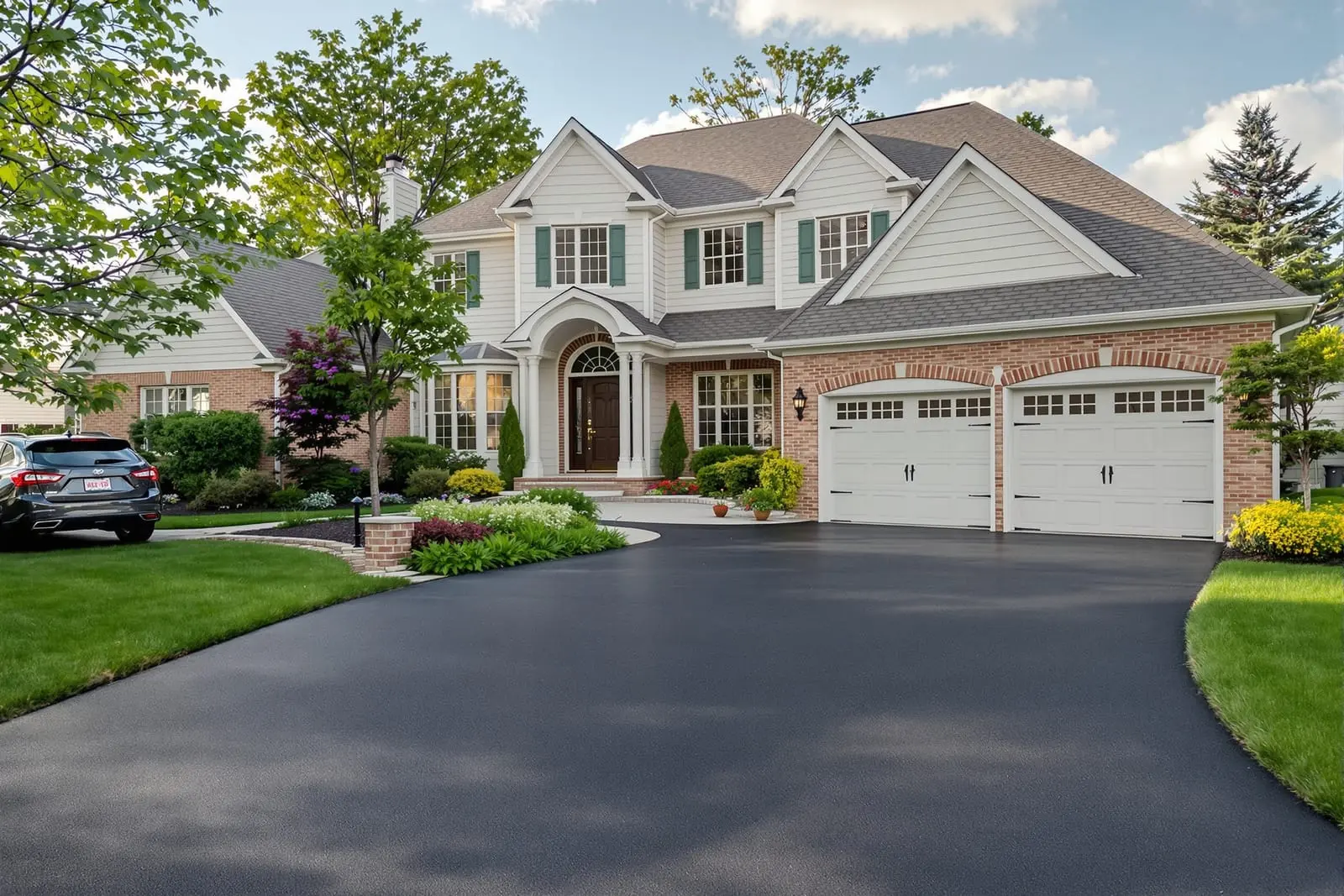
Protect your driveway investment with professional asphalt sealcoating in Durham, NC. We clean and prep the surface, fill cracks, and apply a protective sealer that shields against sun, oil, and water. Routine sealcoating keeps your asphalt darker, smoother, and less likely to crack or ravel over time.
Prestige Asphalt Durham provides professional asphalt sealcoating throughout Durham, NC and the surrounding area. Our licensed, insured crew delivers safe, clean, on-time work with a free estimate before anything begins. Call (919) 647-7504 or request your free quote.
Asphalt sealcoating in Durham that actually holds up
If you live or work in Durham, you already know what our pavement deals with every year: hot, humid summers, sudden thunderstorms, and the occasional freeze. That mix is tough on asphalt. At Prestige Asphalt Durham, our asphalt sealcoating and crack filling is set up specifically for these local conditions, not a one-size-fits-all kit from a big box store.
Sealcoating is a protective layer that goes over your existing asphalt to block water, UV sunlight, and oil from soaking in and breaking it apart. Crack filling targets the gaps that have already formed, keeping water from getting under the surface and widening them. Done together at the right time, they can easily add 5 to 7 years of service life to a driveway or parking lot in Durham.
We focus on practical, long-term results. That means we look at drainage, shade patterns from your trees, and where vehicles actually turn and stop. These details decide which products we use, how many coats we apply, and when during the day we schedule your job so the material cures correctly. The result is a surface that looks new, but more importantly, stands up to our local weather and traffic.
How our sealcoating & crack filling process works
A good sealcoating job in Durham is mostly about preparation. When Prestige Asphalt Durham visits your property, we start with a walk-through. We check the age of the asphalt, look for alligator cracking, potholes, low spots that hold water, and oil-saturated areas. If the surface is failing in large sections, we will tell you that sealcoating is not the right fix and quote repairs instead of wasting your money.
Step 1: Cleaning. We mechanically blow and sweep the asphalt to remove loose gravel, dirt, and leaves. On commercial lots, we often use power brooms in addition to blowers. Oil spots get treated with a degreaser and sometimes lightly torched to help the sealer bond. If the surface is not very clean, the sealer will peel within a year.
Step 2: Crack preparation. We open up larger cracks slightly with a crack router or wire wheel so the material can get down into the joint, not just sit on top. Cracks must be dry. If needed, we schedule a return visit after a rain so moisture does not get trapped under the filler.
Step 3: Hot rubber crack filling. For structural cracks (usually 1/4 inch to 1 inch wide), we use hot-applied rubberized crack sealant, heated in a kettle and applied as a liquid that cools to a flexible, rubber-like strip. On residential driveways we focus on the main through cracks and joints, on commercial lots we typically address all active cracks to slow further spreading.
Step 4: Edge work and detail. Before we spray or squeegee sealer, we cut in around concrete aprons, garage doors, walkways, and drains with brushes, so you get a neat, straight edge instead of splatter on your curbs and sidewalks.
Step 5: Sealcoat application. For most Durham driveways, we use a coal tar or asphalt emulsion sealer with sand and additives for traction and durability. We apply by squeegee, spray, or a combination of both, depending on the surface texture and slope. Commercial parking lots often get a sprayed first coat for penetration and a squeegee second coat for build.
Step 6: Striping and cleanup. On parking lots we re-stripe the layout to match your existing lines or update the design for better traffic flow and ADA compliance. We leave the site clean, remove tape and barricades on our final visit, and leave you with clear instructions on when to drive and park on it again.
What affects cost for asphalt sealcoating in Durham
Every property is different, so we explain exactly what drives the price of your asphalt sealcoating and crack filling before we start.
1. Square footage and layout. A simple straight driveway costs less per square foot than a winding one with tight corners or lots of borders against brick and concrete. For parking lots, islands, loading docks, and tight areas that require more hand work will add labor time.
2. Crack density and severity. A driveway with just a few isolated cracks is mostly a sealcoat job. A lot or drive with extensive cracking needs much more hot rubber material and preparation time. In some Durham neighborhoods with older pavement, we may recommend full-depth patching in a few locations before crack filling to avoid sealing over structural failures.
3. Previous coatings and condition. Old, flaking sealer, heavy oil stains near parking spots, or areas that have raveled (where the surface stones are coming loose) require extra prep. Sometimes we apply a primer over polished or very dry surfaces so the new sealer bonds properly. That extra step adds cost, but it can be the difference between a coating that lasts one year and one that lasts five.
4. Product type and number of coats. We offer different sealer options depending on traffic. Light residential driveways in Durham usually get one heavy coat or two medium coats. Busy commercial lots often need two full coats, sometimes with a higher sand load for slip resistance. The more coats and the higher grade of material, the higher the cost but also the longer the life.
5. Scheduling and traffic control needs. For businesses that must stay partially open, we sometimes phase the work over several evenings or weekends and provide extra barricades and cones. That scheduling flexibility has a cost, but it allows you to keep operations running while we work.
We are upfront about all of this. Prestige Asphalt Durham will give you a written estimate that breaks down the major cost drivers and explains what is included, so you know what you are paying for and can compare quotes fairly.
Durham weather, timing, and how to prepare your property
In the Triangle, timing a sealcoating job correctly is critical. Sealer needs the right combination of temperature, sun, and dry air to cure properly. In Durham we usually schedule most asphalt sealcoating from late March through early November, avoiding days where temperatures stay below about 55 degrees or afternoons with a high chance of thunderstorms.
In summer, we often start earlier in the morning or later in the afternoon so the material does not dry too fast on extremely hot blacktop. If the surface bakes in full sun with temperatures in the 90s, the top can skin over faster than the bottom cures, which can lead to scuffing when you turn your steering wheel in place.
If rain is in the forecast, we would rather reschedule than risk washing off fresh sealer. Prestige Asphalt Durham actively watches local forecasts and will call you the day before if there is any concern. Our goal is one clean trip that leaves you with a solid, cured surface, not a rushed job.
Before we arrive, we will ask you to move vehicles off the asphalt, unlock any gates, and turn off irrigation so sprinklers do not hit the driveway or lot. For commercial properties, we can help you plan tenant notices or customer signage so people know which areas will be closed and for how long.
After the work, most residential driveways in Durham can be walked on after about 6 to 8 hours and driven on after 24 to 48 hours, depending on weather. Commercial lots sometimes need staggered reopening so heavy trucks do not twist on fresh sealer. We will leave you with clear instructions about parking, turning your wheels in place, and placing motorcycle kickstands or trailer jacks on the surface to avoid marks during the first few days.
Choosing Prestige Asphalt Durham & caring for your new surface
Sealcoating is only as good as the crew that applies it. At Prestige Asphalt Durham, our crews specialize in maintenance work, not just new paving, so they know how to read an existing surface and decide what will actually help. If we think part of your pavement will not benefit from sealcoating because it is too far gone, we will say so and suggest a patch or reconstruction instead of coating over a problem.
A typical maintenance plan for a Durham driveway is sealcoating every 3 to 4 years, with small crack touch ups in between if needed. For commercial lots that see daily traffic, we might recommend a 2 to 3 year coating cycle, combined with annual crack sealing on new cracks that open up each winter. Catching cracks when they are narrow is far less expensive than waiting until they become potholes.
We also talk honestly about what sealcoating cannot do. It will not fix deep dips or level a surface, and it will not stop heavy garbage trucks from eventually leaving depressions if the pavement is too thin. What it does very well is keep water and sunlight from breaking down otherwise solid asphalt and keep the surface rich and dark, which can increase curb appeal and make striping stand out.
To keep your newly sealed pavement looking good, we suggest a few simple habits. Avoid turning the steering wheel while your vehicle is not moving, especially in the first month after sealing. Clean up oil spots when you see them. Keep sharp objects like trailer jacks on small pads or boards, not directly on the surface. Sweep or blow off leaves and dirt so they do not hold moisture against the asphalt.
When you call Prestige Asphalt Durham, we will walk you through all of this, look at your specific pavement, and give recommendations that match the way you actually use your driveway or parking lot, instead of a generic one-size-fits-all approach.
“
Professional asphalt sealcoating & crack filling, done right the first time, quality materials, honest pricing, and results that last.
Prestige Asphalt Durham
Asphalt Sealcoating & Crack Filling Across Our Service Area