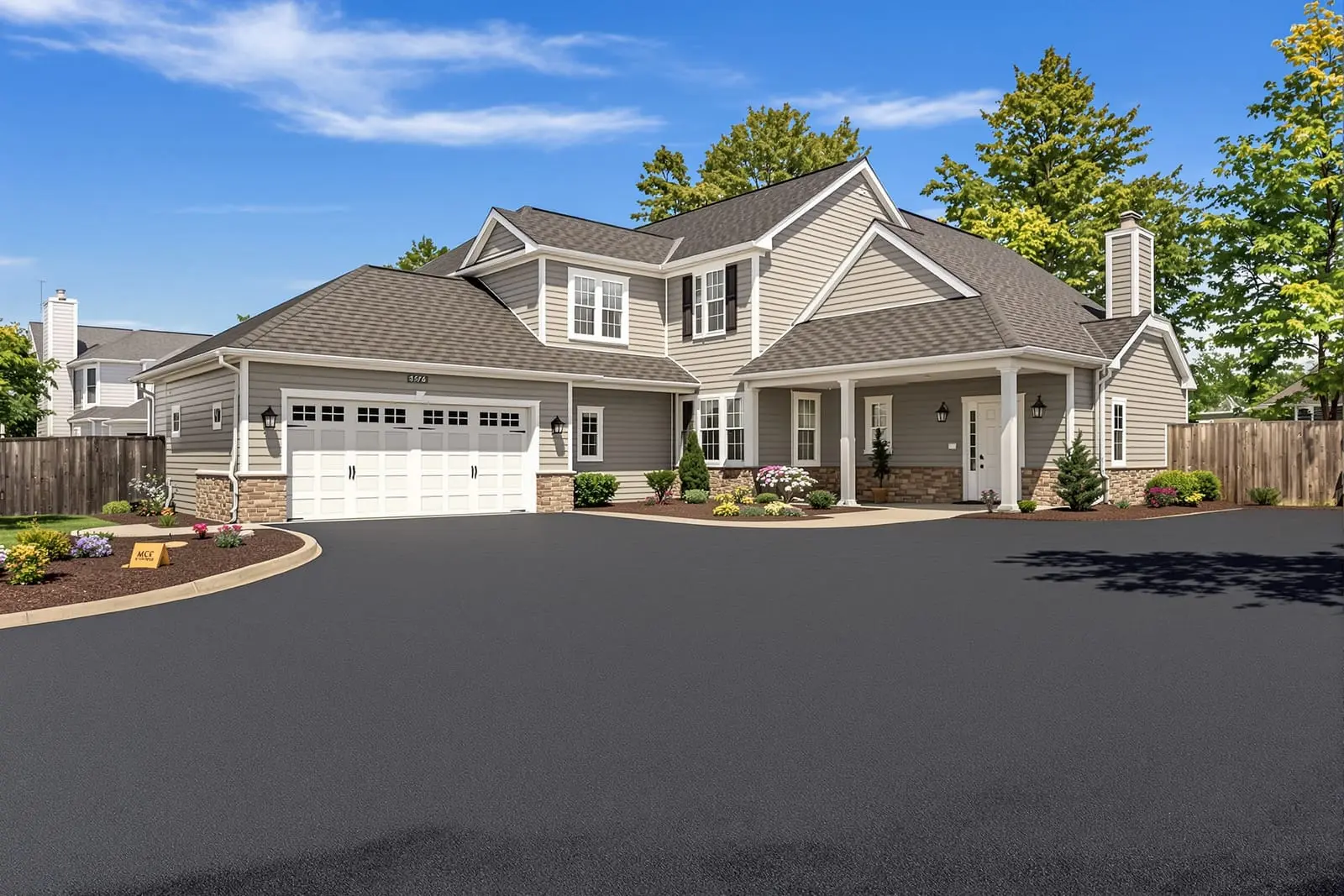
Upgrade rough gravel lots with commercial gravel to asphalt conversions in Durham, NC. We transform dusty, uneven surfaces into clean, efficient asphalt parking and drive lanes. Our team enhances drainage, compacts the base, and paves a durable surface that is easier for customers and delivery vehicles to use.
Prestige Asphalt Durham provides professional commercial gravel to asphalt throughout Durham, NC and the surrounding area. Our licensed, insured crew delivers safe, clean, on-time work with a free estimate before anything begins. Call (919) 647-7504 or request your free quote.
Turn your gravel lot into a durable asphalt surface
If you are running a business in Durham and are tired of dust, ruts, and mud in your gravel parking lot, a commercial gravel-to-asphalt conversion can make a big difference in how your property looks and functions. Prestige Asphalt Durham focuses on converting existing gravel drive lanes, loading areas, and parking lots into smooth, long-lasting asphalt that stands up to Triangle traffic and weather.
A proper conversion starts with what you already have. We walk the entire gravel area with you, look at drainage patterns after storms, check how thick and compact the existing stone is, and flag soft spots that will not support truck or customer traffic. The goal is to reuse as much of your existing gravel base as possible while fixing the weak areas so you are not paying twice for the same work.
In Durham, the best window for commercial gravel-to-asphalt work is usually March through early June and again September through early November. During these months the ground is warm enough for good asphalt compaction, but we avoid the worst summer heat that can make compaction tricky on large open lots. Winter work is possible on some projects, but you will get better long term performance by scheduling when daytime temperatures are consistently above 50 degrees and overnight lows are not deep in the 30s.
What happens during a gravel-to-asphalt conversion
Once we know the condition of your existing gravel, Prestige Asphalt Durham lays out a step by step plan so you know what will happen each day of the project. For a typical commercial lot, we start by grading and shaping the existing gravel to create the right slopes for drainage. We use laser-guided equipment where needed to get consistent pitch away from buildings, entrances, and ADA paths.
Soft or pumping areas are dug out and undercut. That material is replaced with compactable stone like ABC or 57 stone, then compacted in thin lifts with vibratory rollers. This is where a lot of cheaper bids cut corners, but in our experience, most early failures on converted lots come from skipping base repair. For heavy truck areas, like around dumpsters or loading bays, we often deepen the stone base and sometimes add a crushed concrete layer to resist rutting.
After the base is repaired, we may place an additional crushed stone leveling course to tie the whole area together. Then we compact again. The existing gravel becomes part of the new base system, not just something we pave over. Only after the base passes a proof roll test, where we run a loaded truck across the surface to watch for movement, do we bring in hot mix asphalt.
The asphalt is typically installed in one or two lifts, depending on traffic loads. For customer parking areas with mostly passenger vehicles, a common section is a 2.5 inch compacted surface course over a strong stone base. For truck lanes, dumpster pads, and drive aisles that see frequent turning, we may recommend a 2 inch binder course topped with a 1.5 inch surface course. Each lift is spread with a paver, rolled with steel drum and pneumatic rollers, and checked for smoothness and correct slope before it cools.
Design and material options for commercial properties
A commercial gravel-to-asphalt conversion is not just about blacktop on the ground. It is an opportunity to rethink how traffic flows on your site and how customers experience your property. Prestige Asphalt Durham works with owners and facility managers to fine tune layout, entrances, and striping so the finished lot is safer and easier to use.
We can slightly reshape the converted area to create defined drive lanes, safer pedestrian routes, and better truck access. In Durham, many older gravel lots have improvised parking patterns that cause tight turns or backing into active traffic. During conversion, we can shift curb lines, widen choke points, and set up a more logical pattern before the asphalt is installed.
On the asphalt side, there are mix designs that can be tailored to your use. For light duty commercial parking, a standard NCDOT approved surface mix is usually the most cost effective and performs well. For bus traffic, frequent deliveries, or areas where trucks turn in tight circles, a heavier duty mix with a higher stone content can reduce shoving and rutting. For dumpster and compactor pads, we sometimes recommend thickened asphalt with added base stone, or a small concrete insert tied into the asphalt around it, especially in back-of-house areas where heavy trucks stop and turn.
We also plan for future maintenance while we are designing the conversion. Placing joints in logical locations, building in room for future resurfacing, and setting grades to allow for a future overlay can extend the life of your investment and keep future costs down.
Cost drivers, timelines, and what affects your budget
The cost of a commercial gravel-to-asphalt conversion in Durham varies widely based on what is under your feet. The biggest driver is base condition. If your gravel lot has been built up and compacted over years with good drainage, you may need only minor repairs and leveling before paving. If the lot holds water after a storm or shows deep ruts, we may need to undercut wet areas, install underdrains, or import additional stone. Those items add to the budget but they also prevent you from paying to patch and repave repeatedly.
Total square footage is the next major factor. Larger lots often have a lower cost per square foot, but they also require more traffic control planning. In Durham, many commercial properties must remain open during construction. Prestige Asphalt Durham can phase the work, converting sections at a time so you always have a way in and out for customers, employees, and deliveries. Phasing adds some mobilization cost, but for most active businesses that cost is offset by being able to stay open.
Asphalt thickness and mix type affect price too. A light-duty parking lot section is less expensive per square foot than a lot with thickened truck lanes, heavy-duty mix, and reinforced dumpster pads. During estimating, we separate these areas out so you can see what you are paying for and, if needed, adjust scope to match your budget.
Timeline depends on weather, lot size, and how much base repair is needed. A small retail lot may be converted in 2 to 3 working days from grading to striping, often scheduled early in the week so you are ready for weekend traffic. Larger industrial yards can take a week or more. In either case, we provide a day by day plan in advance that covers when areas will be closed, when asphalt trucks will be on site, and when you can resume normal traffic.
Common issues on gravel lots and how we fix them in Durham
Gravel lots in the Durham area tend to develop the same problems over time, especially with our mix of clay soils and heavy rain. Low spots that hold water, soft shoulders where vehicles leave the main drive lane, and washouts where stormwater cuts across the surface are all warning signs that need to be addressed in a gravel-to-asphalt conversion.
To deal with standing water, Prestige Asphalt Durham looks first at how stormwater moves across your site. Sometimes the solution is as simple as regrading and building a stronger crown in the driving lanes. Other times we need to install new catch basins, tie into existing storm structures, or add shallow swales to move water away before it reaches the new asphalt. Ignoring drainage is the fastest way to shorten the life of a new paved surface.
On clay sites, which are common across Durham and RTP, we often encounter soft subgrade underneath what looks like solid gravel. If a proof roll shows movement, we undercut those pockets, replace them with stone, and compact in layers. For larger soft areas, we may add geotextile fabric between the clay and the new stone base to keep the layers separate and prevent future pumping. This is a step that pays off, especially in truck yards and around loading docks.
Before you hire any contractor for a commercial gravel-to-asphalt conversion, ask how they evaluate the existing base, how they handle drainage, and what thickness and mix they recommend for each traffic area. A detailed written scope that spells out these items protects you from vague promises and lets you compare bids on equal terms. Prestige Asphalt Durham encourages questions on these points and will walk the site with you so you can see exactly what is being proposed and why.
“
Professional commercial gravel-to-asphalt conversions, done right the first time, quality materials, honest pricing, and results that last.
Prestige Asphalt Durham
Commercial Gravel-to-Asphalt Conversions Across Our Service Area